Ulpan.com's daily dose of Hebrew Headline Animator

Showing posts with label lag b'omer. Show all posts

4/27/13

making Lag b'Omer more significant than Shabbos

After I write this, you are probably going to call me too much of a kalte Litvak, which I technically am not though I did learn in Litvishe yeshivas. Or you might call me a Yekke, which I technically am though I did not grow up in a yekkishe community nor was our house overly yekkishe except for a few great customs (such as no mayim achronim, washing before kiddush, 3 hours between meat and milk, etc). But I am going to write it anyway.
Some holidays are overdone. I would even go so far as saying their significance and importance, especially in Israel, is "made up", fabricated and exaggerated. An example of this is Lag b'Omer. It does not really have much significance as a holiday, but people have given it all sorts of importance with kabbalistic meaning and significance. It is mostly a day of commemoration, maybe of a birthday, maybe of a death day, maybe of celebration for the revealing of the Zohar. Instead of a simple commemoration, and dropping tachanun out of davening, we light bonfires and stay much of the night, and give the kids one or two days off of school. And of course the conversion of bonfires to barbecues with hotdogs, potatoes and marshmallows makes for a good bonus. Hey - if that's what does it for them, more power to 'em. I usually enjoy a good party and when everybody is happy and celebrating something, people are that much more pleasant.
Other made up holidays include days like Yom HaAtzmaut, though it is different than Lag b'Omer. Yom HaAtzmaut is made up, literally, but is more of a secular holiday of gratitude, something akin to Thanksgiving combined with Independence Day, and giving thanks always also can take on some religious significance. Throw in some eretz yisrael emotions, and you also get a religious holiday in addition to the secular holiday. Again, I usually enjoy a good party, and of course giving thanks is important. I love barbecues and am a patriotic person by nature, and again, when people are happy and celebrating something, all is good.
Those are the two off the top of my head. There are probably more, though I can't think of other examples right now.

bonfires....

The official call by the Rabbanut to delay bonfires to Sunday evening was announced in the newsletter. It says that in order to avoid chilul Shabbos, the Rabbanut calls on everyone to delay the bonfires to Sunday afternoon. As well, Lag b’Omer vacation form schools has been increased to two days, upon the request of the Chief Rabbis.
The Rabbanut adds that the merit of the Tanna, Rabbi Shimon bar Yochai should protect us and intercede on our behalf so that our prayers should be accepted…
source

lag b'omer sameach

Lag BaOmer, this year, April 28, 2013, is a festive day on the Jewish calendar, celebrating the anniversary of the passing of the great sage and mystic Rabbi Shimon bar Yochai, author of the Zohar. It also commemorates another event. In the weeks between Passover and Shavuot, a plague raged amongst the disciples of the great sage Rabbi Akiva. On Lag BaOmer the dying ceased.

4/22/13

dry bones on lag b'omer


Lag B’Omer’s Coming


lag b'Omer


In Israel, months before the advent of the festival of Lag B’Omer,  the 33rd day of the Omer, the 49 days that bridge between Passover and Shavuot ,one can see youngsters dragging all types of combustibles, from fallen trees to broken chairs to old mattresses. Their destination? The nearest empty lot, where they pile their treasured possessions to impossible heights and wait with eager anticipation until the night of Lag B'Omer, arguably their favorite time of year, when they turn the piles into enormous conflagrations. Ask anyone what the bonfires are for, and you'll be told they are in celebration of Rabbi Shimon bar Yochai, a great sage who lived and taught approximately half a century after the destruction of the second Temple.
What lies behind this rather enigmatic festival of Lag B’Omer? What’s so special about the 33rd day of the Omer? And who was Rabbi Shimon, to whose name Lag B’Omer is inextricably tied, and why do we celebrate him? And why the bonfires?
Some Background
The first 33 days of the Omer are observed as a period of mourning. We do not take haircuts, perform weddings, or listen to music. What’s the mourning all about?
Rabbi Akiva, the towering sage of the Mishna, exerted a powerful influence on the Torah scholars of his day, to the point that he had 24,000 disciples. Great as the members of this group was, they had one short-coming: They failed to show proper love and respect for one another. The tragic consequence of this shortcoming was a brief but cataclysmic epidemic that claimed the lives of these students – all 24,000 of them. The period during which the epidemic took place was none other than the first 32 days of the Omer.

5/9/12

Have a great lag b'Omer day!

מראות ההוד מלג בעומר הילולת רבי שמעון בר יוחאי

Rainbow and Lag b'Omer

Lag B'Omer occurs on the 18th day of Iyar: this year Thursday May 10 [begins Wednesday night]
Why is Lag b’Omer celebrated with bonfires and bows and arrows?
by Rabbi Yossi Marcus
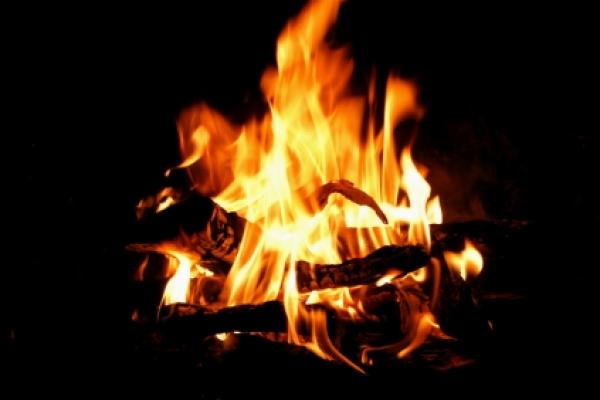
The bonfires celebrate the immense light that was brought into the world by Rabbi Shimon bar Yochai [who passed away on Lag b’Omer], especially on the day of his passing.
The bow commemorates the fact that during Rabbi Shimon’s lifetime no rainbow was ever seen. [Bereishit Rabbah 35:2] Note: This was a good thing because the rainbow appears when the earth deserves punishment. The first time a rainbow appeared was after Noah’s flood, when G-d said that He will no longer destroy the world, rather He would send a sign: the rainbow. During Rabbi Shimon’s lifetime, the world was filled with merit because of him and therefore never saw a rainbow. 
There is a Kabbalistic tradition that on Lag b’Omer a rainbow will appear in a different color, which will symbolize the arrival of the Messianic age [Bnei Yissaschar]

5/8/12

on Lag B’Omer, ‘really remember Rabbi Shimon’

As Lag B’Omer approaches, Rabbi Ratzon Amrousi is calling to remember the real meaning of the day. 
“We tend to see people getting caught up in the details instead of what really matters, and turning visits to tombs into the main event while at the same time continuing to do wrong,” he told Arutz Sheva.
This is a particular concern on Lag B’Omer, he said, “when the memory of the righteous (Rabbi Shimon Bar Yochai) could really help, but there are some bad things done that evening.”
“We need to remember his teachings, which were based on ‘love your fellow man as yourself,’ love between people and between man and G-d.”

6 reasons why we rejoice on Lag BaOmer Rabbi Shimon Bar Yochai's Yahrtzeit

The Shulchan Aruch (OC 580:2) says that the day a Tzaddik was niftar is a fast day such as Adar 7 for Moshe Rabbeinu.  Yet Lag BaOmer, the yahrtzeit of Rebbi Shimon Bar Yochai is a day of happiness.  What is the difference.  The Sefer Ohr HaYikod Heim Yokdim gathered a list of reasons.  Among them include,
 
1.  Rebbi Shimon himself called it Yom Simchaseinu.  The Shach paskens (YD 344:9) that if someone requests not to mourn him on his yahrtziet we listen to him.  Rav Chaim Vital says that Rebbi Shimon appeared to the Arizal and complained of someone saying Nacheim on his yahrtzeit.
2.  Moshe Rabbeinu did not fulfill his dream of bringing Bnei Yisroel into Eretz Yisroel. Rebbi Shimon was very happy about the day of his petira.
3.  When Moshe was taken, 3,000 halachos were forgotten.  When Rebbi Shimon was niftar, many Sodos HaTorah were revealed in the Idra Zuta.
4.  Lag BaOmer we celebrate that Rebbi Shimon eluded death at the hands of the Roman emperor.  it was only celebrated after his petira in order not to anger the Romans.  The day of his petira was the appropriate day since had he been killed by the Romans he would not have been buried.
5.  Death of a tzaddik causes a celebration in Shamayim and mourning on earth.  When Rebbi Shimon was niftar the celebrations in Shamayim were revealed to the world, and all partook in the simcha.
6.  Rebbi Shimon left behind a son worthy of filling his role.  Moshe Rabbeinu did not.  

5/1/12

praising the chef


Zohar, Idra Zuta: "Rebbe Shimon opened his eyes, and saw what he saw, and a tremendous flame encircled him."
 
Lag B'Omer is the yahrtzeit, or anniversary of the death of the famed Tannaic scholar and tzaddik, Rebbe Shimon bar Yochai, affectionately known by the initials of his name as "Rashbi", author of the holy Zohar.
In several places throughout the Zohar, Rashbi's disciples say, "Woe to the generation that loses Rebbe Shimon." They compare a generation without a tzaddik of Rashbi's stature as orphans. The Gemorra uses even stronger terms when it laments, "The death of a tzaddik is comparable to the burning of the House of Hashem," (Rosh Hashonna, 18b). In light of such expressions from the holy mouths of our people's greatest sages, what are we all so happy about on Lag B'Omer? Why all the singing, dancing, and bonfires?
Rebbe Nachman of Breslev explains (Likutei Moharan I:66, citing the Zohar, Noach 59), that every tzaddik has a double spirit, one in this world and one in the next world. In essence, the upper spirit can't stand the coarse impurity of the material world. But, right before the tzaddik's death, the upper spirit descends to greet the lower spirit, bringing with it the loftiest wisdom of the upper worlds. The lower spirit happily clings to the upper spirit, for she is part of it. Like the flame of a candle melding with a great flame, the lower spirit merges with the upper spirit. As part of the upper spirit, she can no longer remain in this world, and she must leave the tzaddik's body and ascend to the upper worlds; such is the death of a tzaddik.
Rebbe Nachman explains that at the time of death, a tzaddik reaches a lofty level of spiritual cognizance and understanding, much greater than during his lifetime, by virtue of the upper spirit's magnificent illumination. Under the influence of the upper spirit and only momentarily before his departure from the flesh, Rashbi revealed the secrets of the Idra Zuta.